


The world’s first physical AI to learn movements and force modulation (proprioception) from everyday bare-handed tasks* BodySharing® Physical AI makes its public debut at CEATEC
- Event
- Press Release
To members of the media
October 14, 2026
H2L, Inc.
The world’s first physical AI to learn movements and force modulation (proprioception) from everyday bare-handed tasks*
BodySharing® Physical AI makes its public debut at CEATEC
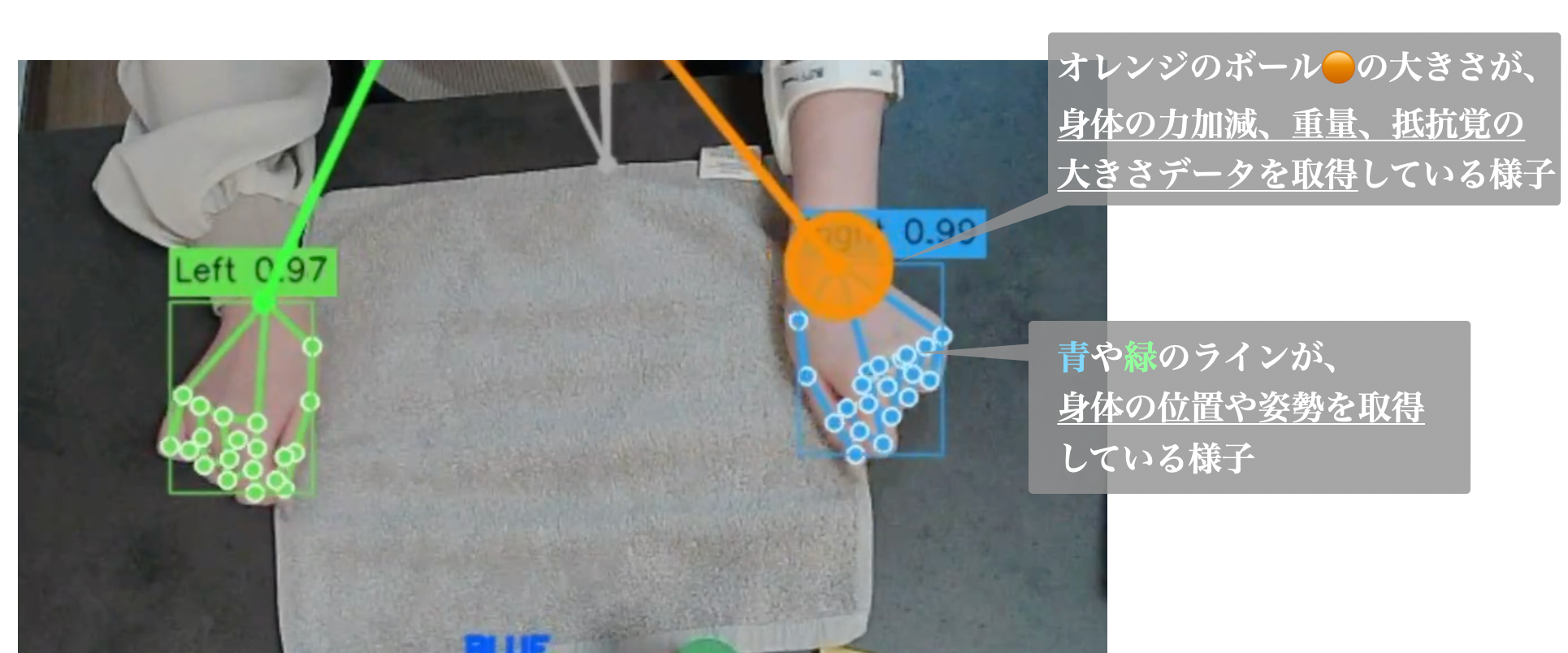
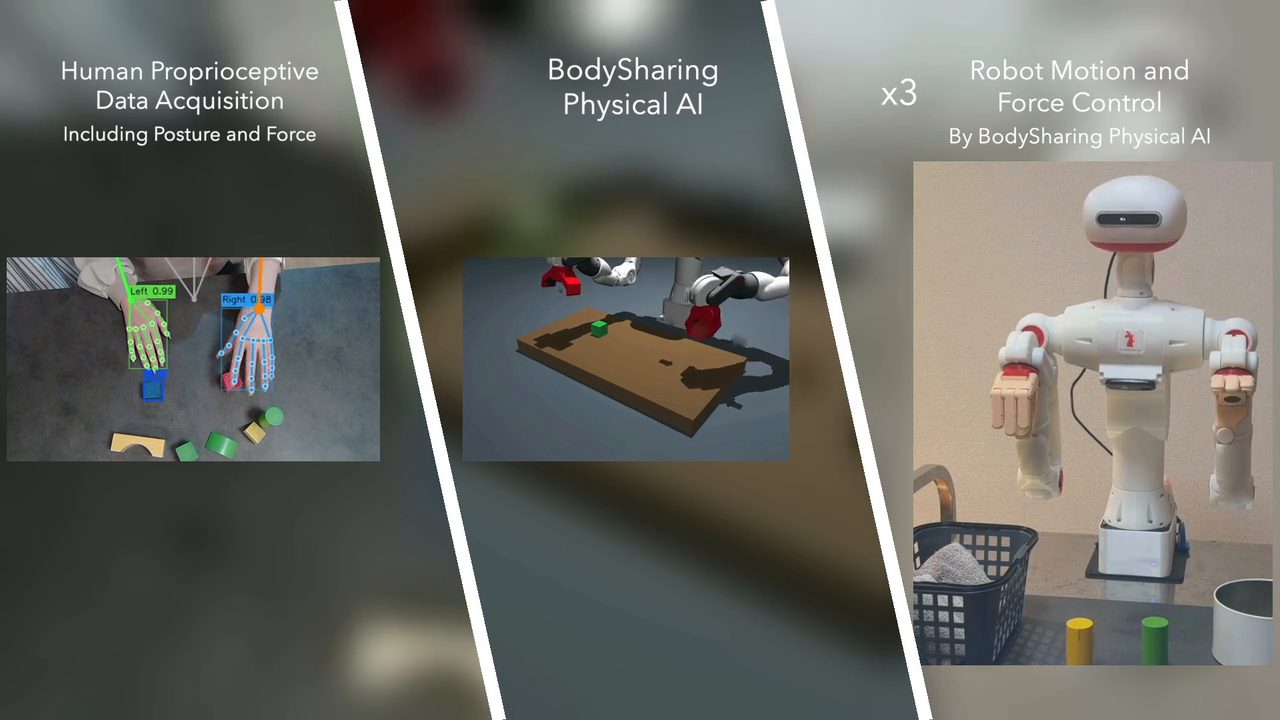
*As a physical AI that uses optical muscle displacement sensors and a smartphone or PC camera to learn movements and force modulation (proprioception) from everyday bare-handed tasks. Based on research by H2L, Inc. as of October 14, 2026.
Introduction video https://www.youtube.com/watch?v=r0qY0uBVVro
Public debut at CEATEC
H2L, Inc. (headquartered in Minato-ku, Tokyo; CEO: Emi Tamaki; hereafter “H2L”) is presenting BodySharing® Physical AI, which learns movements and force modulation (proprioception) from everyday bare-handed tasks, to the public for the first time at CEATEC 2026, held at Makuhari Messe from Tuesday, October 13 to Friday, October 16, 2026.
At CEATEC, visitors can see how BodySharing Physical AI begins learning and how humanoid robots controlled by BodySharing Physical AI autonomously perform various tidying tasks. Learning movements and force modulation (proprioception) from everyday bare-handed tasks begins simply by wrapping the FirstVR muscle displacement sensor device around an arm, setting up a smartphone or PC camera, and launching the dedicated app.
Learning and autonomous control on display
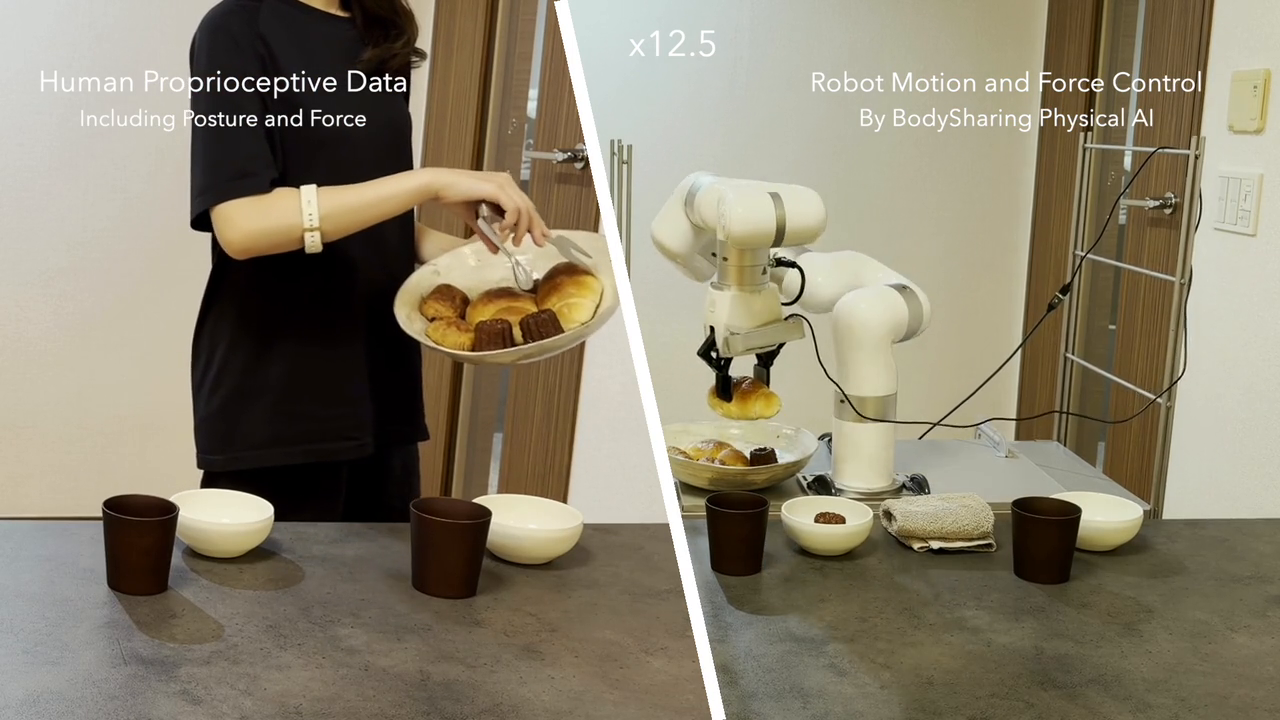
The exhibit introduces a system that captures movement and force modulation data from tasks performed by people with their bare hands and uses this experiential data to support robot task learning. Visitors can follow the process from acquiring human training data and generating control signals with BodySharing® Physical AI through to autonomous tidying by a robot.
Turning bare-handed movements and force modulation into training data
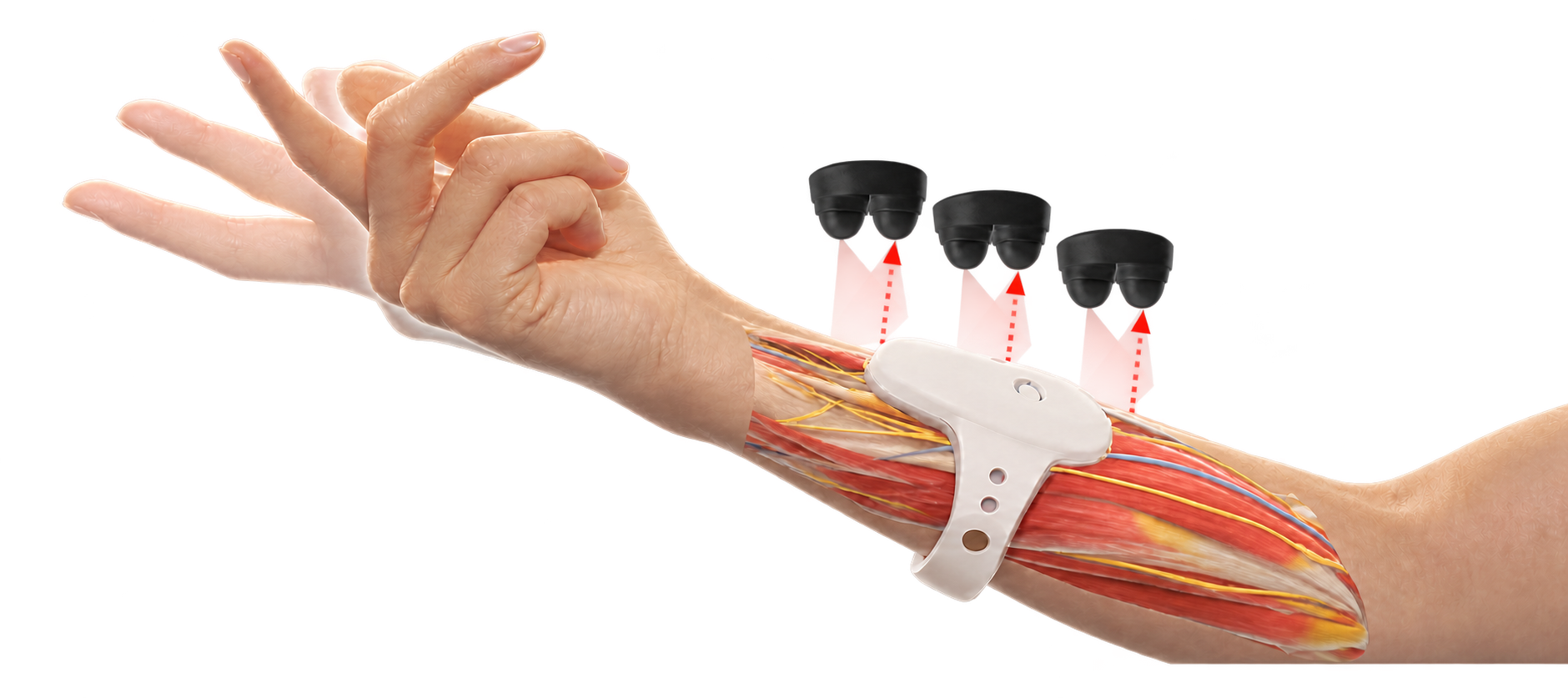
Proprioception is the sense related to posture and movement, as well as force modulation involving weight and resistance. H2L’s optical muscle displacement sensors read muscle bulging and estimate force modulation from changes in that bulging. Combining this information with posture and movement data allows learning to incorporate how force is adjusted to suit an object, alongside the steps used to move it.
Operators wear FirstVR on an arm and handle objects with their bare hands. BodySharing® Physical AI learns from this experiential data, including movements and force modulation, and generates control signals that include robot movements and force modulation.
How muscle bulging is used to estimate force modulation
Tasks such as grasping, lifting, and placing objects involve changes in both hand movements and the application of force. H2L’s optical muscle displacement sensors read the muscle bulging that occurs during these tasks and use changes in it to estimate force modulation.
Experiential data combining movements and force modulation
With FirstVR wrapped around an arm, operators can handle everyday tools and objects with their bare hands. Posture and movement data captured by a smartphone or PC camera are combined with force modulation estimated from muscle displacement, recording how the body is used during a task as proprioceptive data.
When an object is lifted, for example, learning uses both how the hand moved and how force was applied at the time. Force modulation is estimated from the state of the muscles; the system does not directly measure an object’s weight or the force applied to the hand.
From human experiential data to autonomous robot control
BodySharing® Physical AI uses proprioceptive data, including movements and force modulation, as a small number of tokens for learning. Tokens are units that AI uses to process information. Based on what it has learned from human experience, it generates control signals specifying how a robot should move and modulate force during a task, enabling autonomous robot control.
Optical muscle displacement sensors are resistant to electrical noise and noise caused by water, and can also be used to acquire task data in wet environments. The equipment must be worn and operated in environments appropriate to its specifications.
CEATEC 2026 exhibit information
Dates: Tuesday, October 13 to Friday, October 16, 2026
Opening hours: 10:00–17:00
Venue: Makuhari Messe
Exhibit location: Hall 6, X (Transformation) Park, 6H242
Within the joint booth of the Interverse Social Implementation Promotion Meta-Consortium (National Institute of Advanced Industrial Science and Technology) and the Human Augmentation Consortium (NTT DOCOMO)
Admission: Free. Advance online registration is required.
CEATEC official website https://www.ceatec.com/ja/
Business deployment and media inquiries
H2L welcomes inquiries about acquiring on-site task data, building dedicated physical AI, and connecting it to robots. Potential applications include skill transfer in manufacturing, goods handling in logistics and retail, and support for tidying at home. We propose deployment methods suited to the task and operating environment.
Special feature page https://h2l.jp/en/bodysharing-physical-ai-2/
Deployment and media inquiries https://h2l.jp/en/contact-en/
Email: info@H2L.jp
Company overview
Company name: H2L, Inc.
Address: 3-4-21 Roppongi, Minato-ku, Tokyo 106-0032, Japan
Representative: CEO Emi Tamaki
Established: July 2, 2012
Business: Support tools that unlock human capabilities; research, development, and provision of AI; and services that share experiences by transmitting bodily movements
Official website https://h2l.jp/en/
Images: H2L, Inc. BodySharing® Physical AI special feature page
CEATEC Press Kit
Download the press materials and publication images: Download the CEATEC press kit.