


BodySharing®
Physical AI
Learning human proprioception
Physical AI developed in Japan
BodySharing® Physical AI learns human proprioception and generates control signals for robot motion and force. These signals enable autonomous robot control.
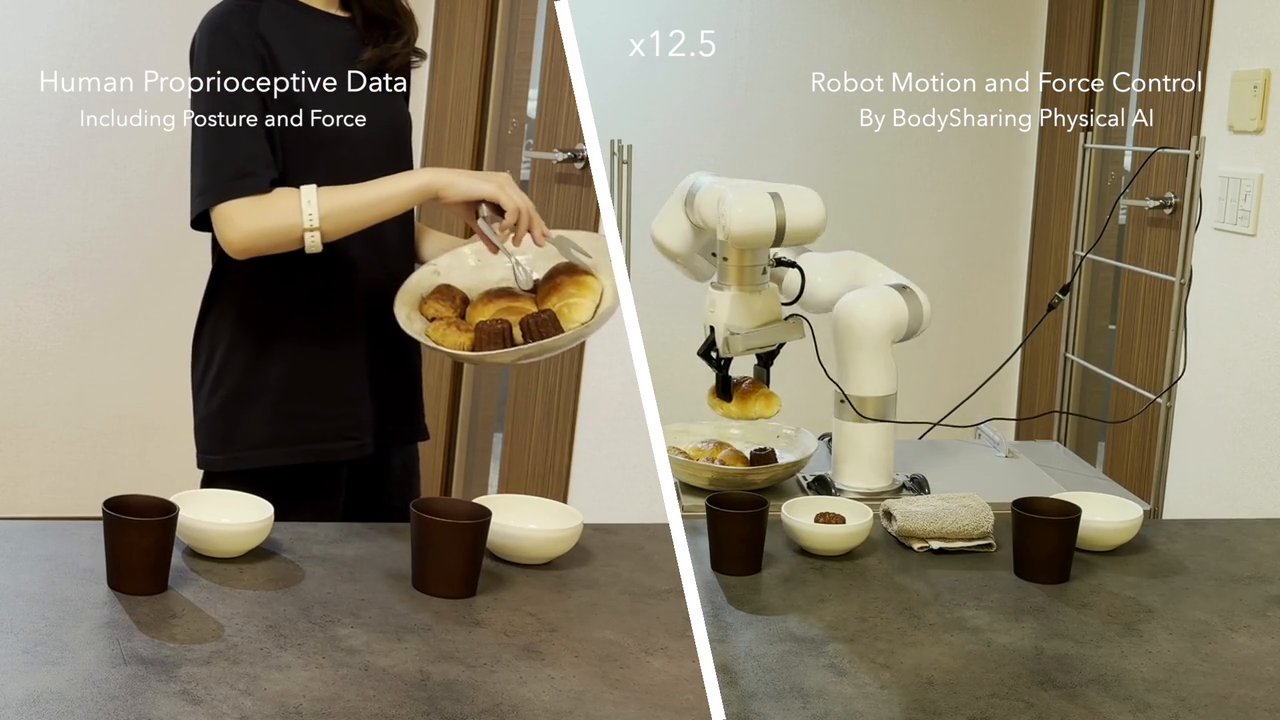
Training data for motion and force
Wrap the FirstVR muscle displacement sensor device around your arm, set up a smartphone or PC camera, and launch the dedicated app. That is all it takes to start training the Physical AI.
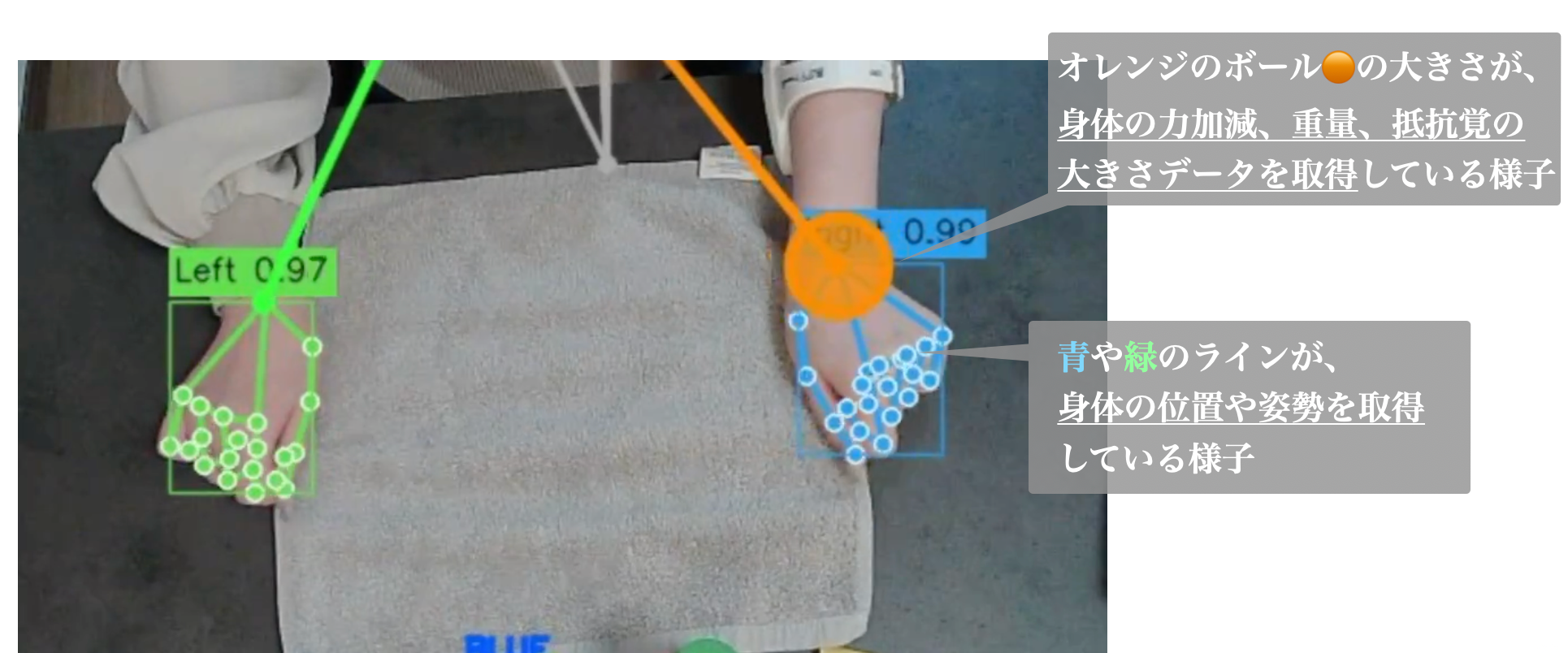
Human proprioception, including posture and movement as well as the force felt as weight or resistance, becomes training data for Physical AI.
BodySharing® Physical AI learns robot tasks from a small amount of experience data recording human movement and force. It then generates control signals for motion and force to enable autonomous robot control.
Posture and force
Physical AILearn from experience data
Enable autonomous control
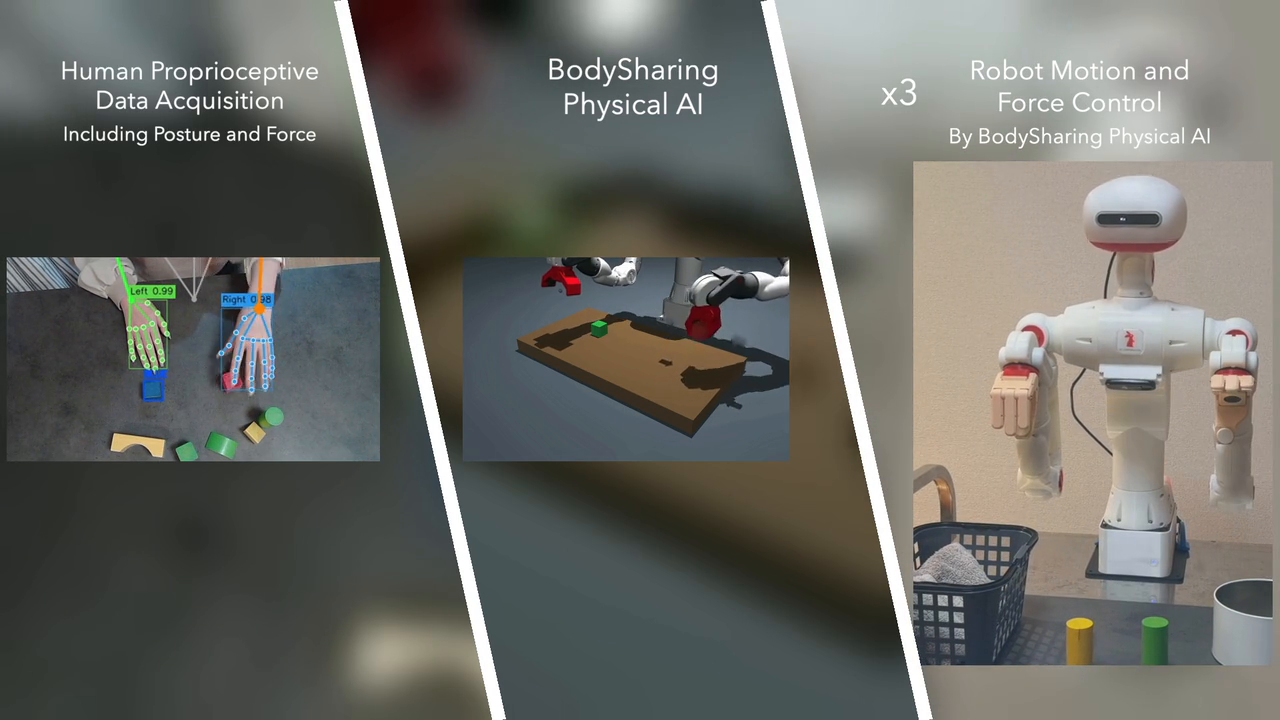
Task learning from limited experience data
3 people × 5 min
11 people × 1 min × 2 trials
The times shown are the lengths of experience data used for training, not model computation time.
The two measured conditions involved different groups of participants.
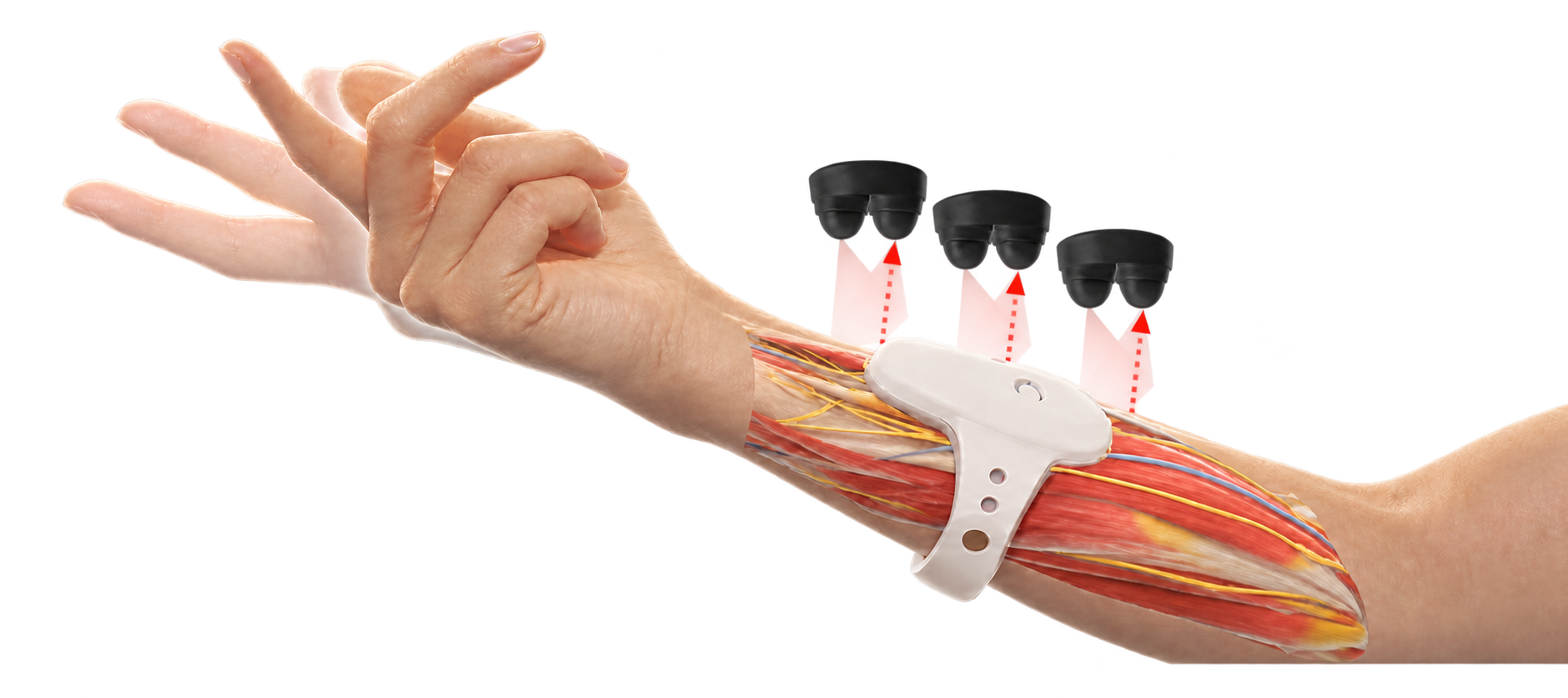
Estimating force from muscle expansion
The muscle displacement sensor reads changes in muscle shape to estimate applied force.
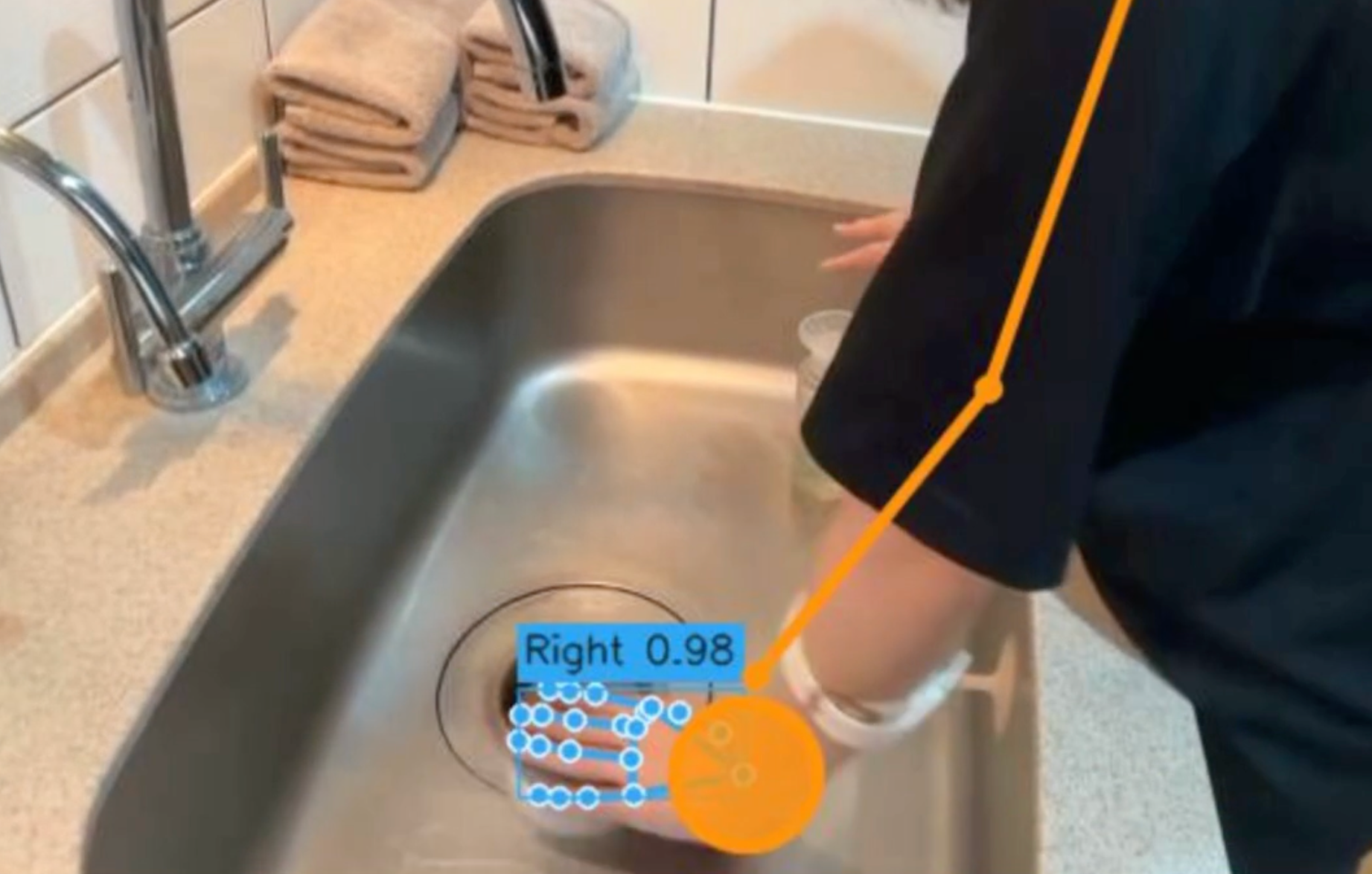
Data collection around water
Because the muscle displacement sensor is optical, it is resistant to electrical interference and water-related noise, enabling data collection around water. Use it with attachment methods and environments suited to the device specifications.
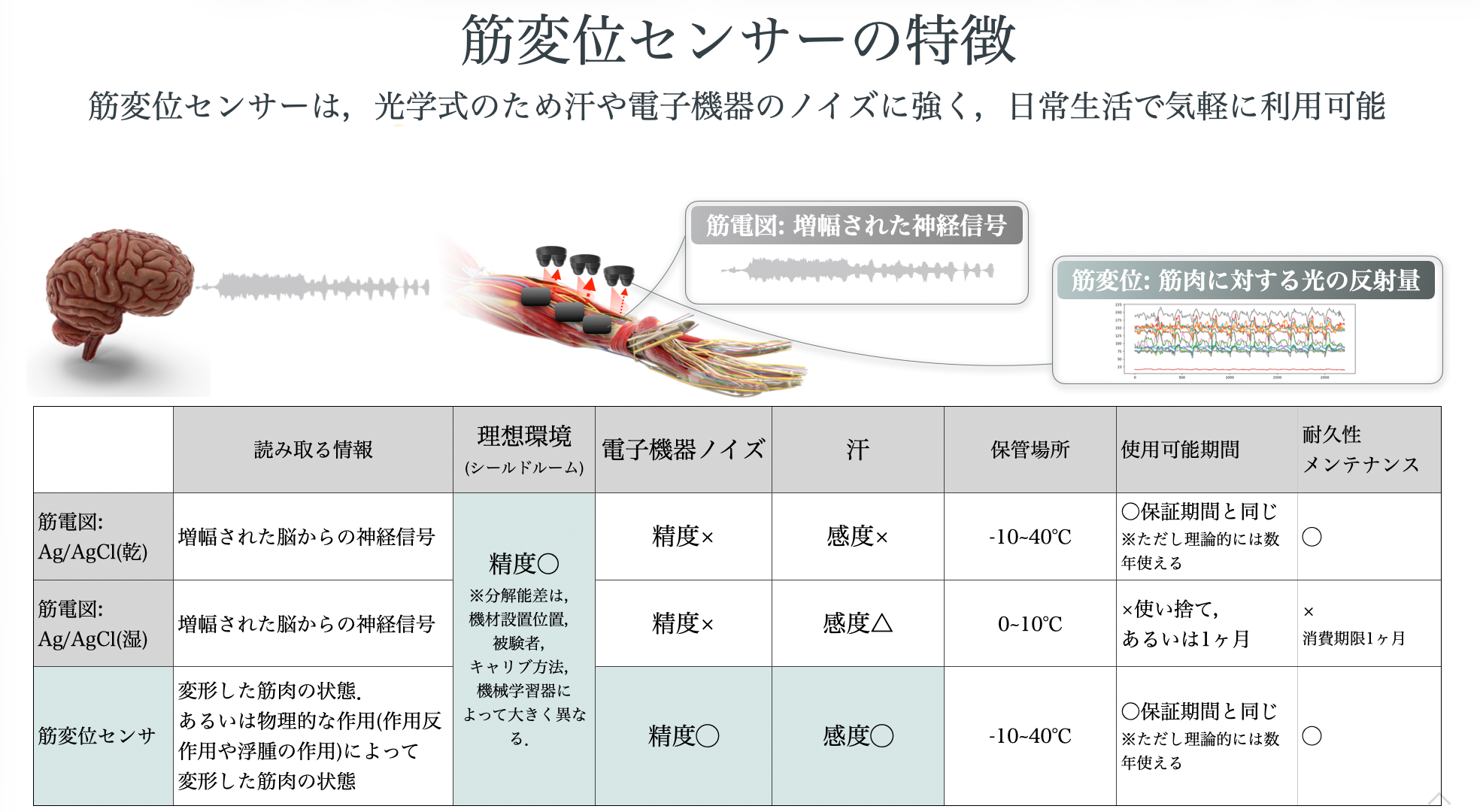
Muscle displacement sensing and EMG
The original graphic compares EMG, which reads neural signals, with muscle displacement sensing, which reads the state of a changing muscle. Symbols and conditions follow the original graphic. Scroll horizontally to see all columns.
| Method | Electronic interference | Sweat | Storage temperature | Usable period | Durability and maintenance |
|---|---|---|---|---|---|
| EMG Ag/AgCl (dry) | Accuracy × | Sensitivity × | −10〜40℃ | ○ Same as warranty period Original note: theoretically usable for several years | ○ |
| EMG Ag/AgCl (wet) | Accuracy × | Sensitivity △ | 0〜10℃ | × Single use or one month | × Expiry: one month |
| Muscle displacement sensor | Accuracy ○ | Sensitivity ○ | −10〜40℃ | ○ Same as warranty period Original note: theoretically usable for several years | ○ |
In the original graphic, EMG accuracy is marked ○ in an ideal shielded room. Differences in resolution depend substantially on sensor placement, the participant, calibration, and the machine-learning model.
Potential business applications
We aim to apply data about human movement and force in a range of workplaces.
Passing on factory skills
Building household services
Expanding entertainment experiences
Custom edge Physical AI
Use with existing robots
Logistics handling support
Retail product handling support
Task analysis and training
Robot compatibility BodySharing® Physical AI has been demonstrated on xArm7 and Sciurus17. Support is planned for single-arm and dual-arm robots with grippers and at least six degrees of freedom.
These are proposed applications. Supported robots and tasks depend on individual specifications and evaluation conditions.
Press kit
Download press materials and images as a ZIP file.
Download press kit ↓Discuss business adoption
We can discuss how to apply this technology to your tasks and challenges.
Discuss business adoption →If the form does not work, email info@H2L.jp.