


Japan-developed Physical AI achieves 95% task success with 15 minutes of human experience data
- Press Release
October 14, 2026 H2L, Inc.
BodySharing® Physical AI turns human proprioception into training data
The world’s first Physical AI to learn movements and force application in everyday tasks performed with bare hands, using H2L’s optical muscle displacement sensor ※
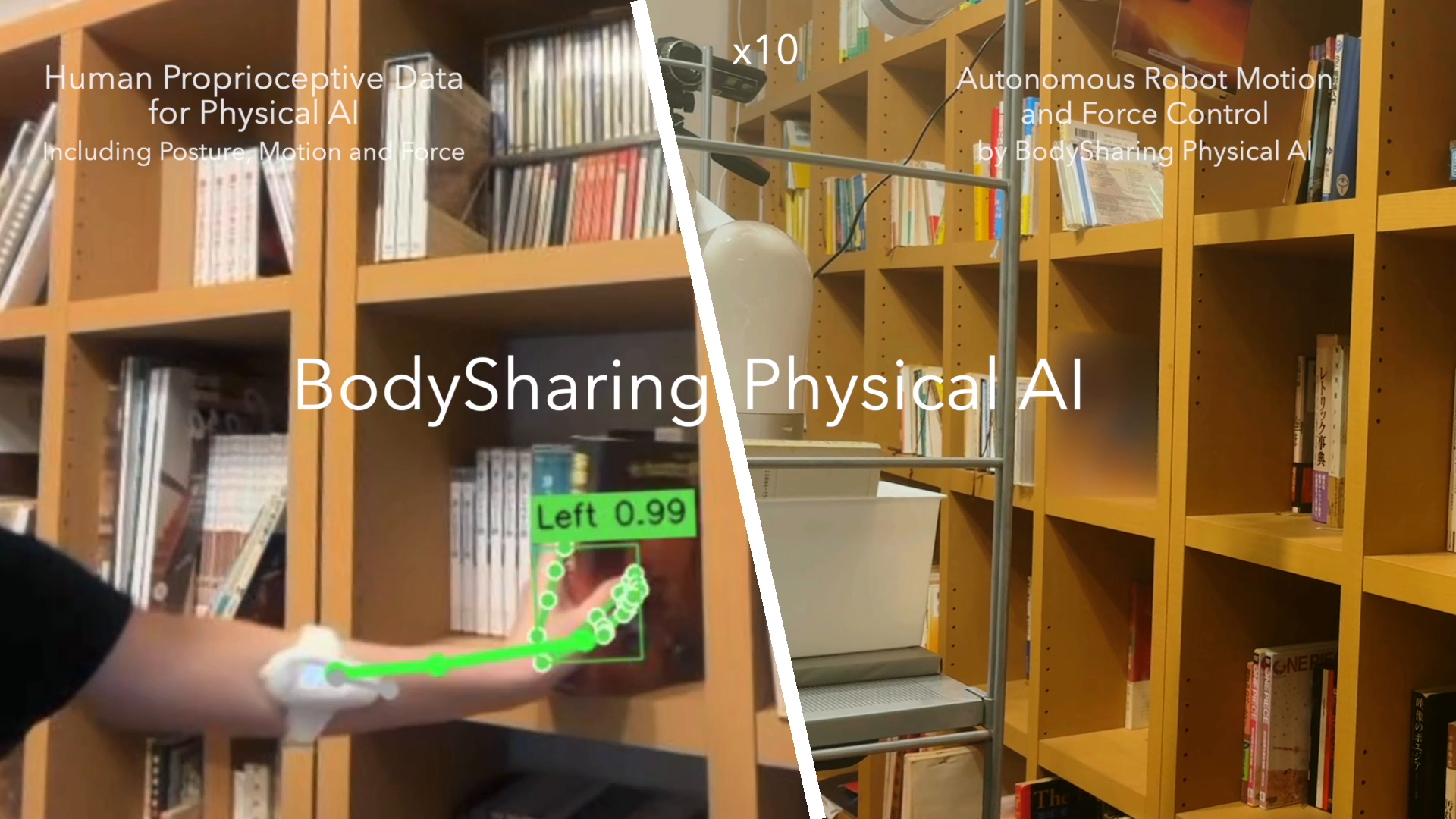
Introduction video (scheduled for release at 8:00 a.m. JST on October 14): https://youtu.be/r0qY0uBVVro
H2L, Inc. (headquartered in Minato-ku, Tokyo; CEO: Emi Tamaki; hereafter “H2L”) announces BodySharing® Physical AI, a Physical AI developed in Japan.
Wrap the FirstVR muscle displacement sensor device around your arm, set up a smartphone or PC camera, and launch the dedicated app. That is all it takes to start training the Physical AI.
BodySharing® Physical AI uses human proprioceptive data, including posture, movement, and force application, as learning data in a small number of tokens. From these data, it generates control signals containing robot motion and force application and uses those signals to control a robot autonomously. In an internal evaluation involving the transport and organization of cubes and towels, the system achieved a 95% task success rate with 15 minutes of human experience data used for training and 99% with 22 minutes. Each condition was tested in 100 trials. The participant groups and demonstration methods differed between the two conditions, so the results should not be compared on the basis of data duration alone.
Background
For robots to perform everyday tasks, they need to learn not only how to move objects but also how much force to apply to each object. H2L uses human proprioception, including posture and movement as well as the sense of weight and resistance, as learning data for Physical AI. By recording workers’ movements and force application, H2L aims to support the transfer of skilled practices accumulated in Japanese industry and the automation of work.
A muscle displacement sensor that records work performed with bare hands
H2L’s optical muscle displacement sensor reads changes in muscle bulging and estimates force application from those changes. Separately acquired posture and movement data are combined with force data for training. Workers can handle objects with bare hands while wearing the sensor. It is resistant to electrical and water-related noise and can be used to collect data in everyday environments and wet work areas. Use requires a wearing method and environment appropriate to the device specifications.
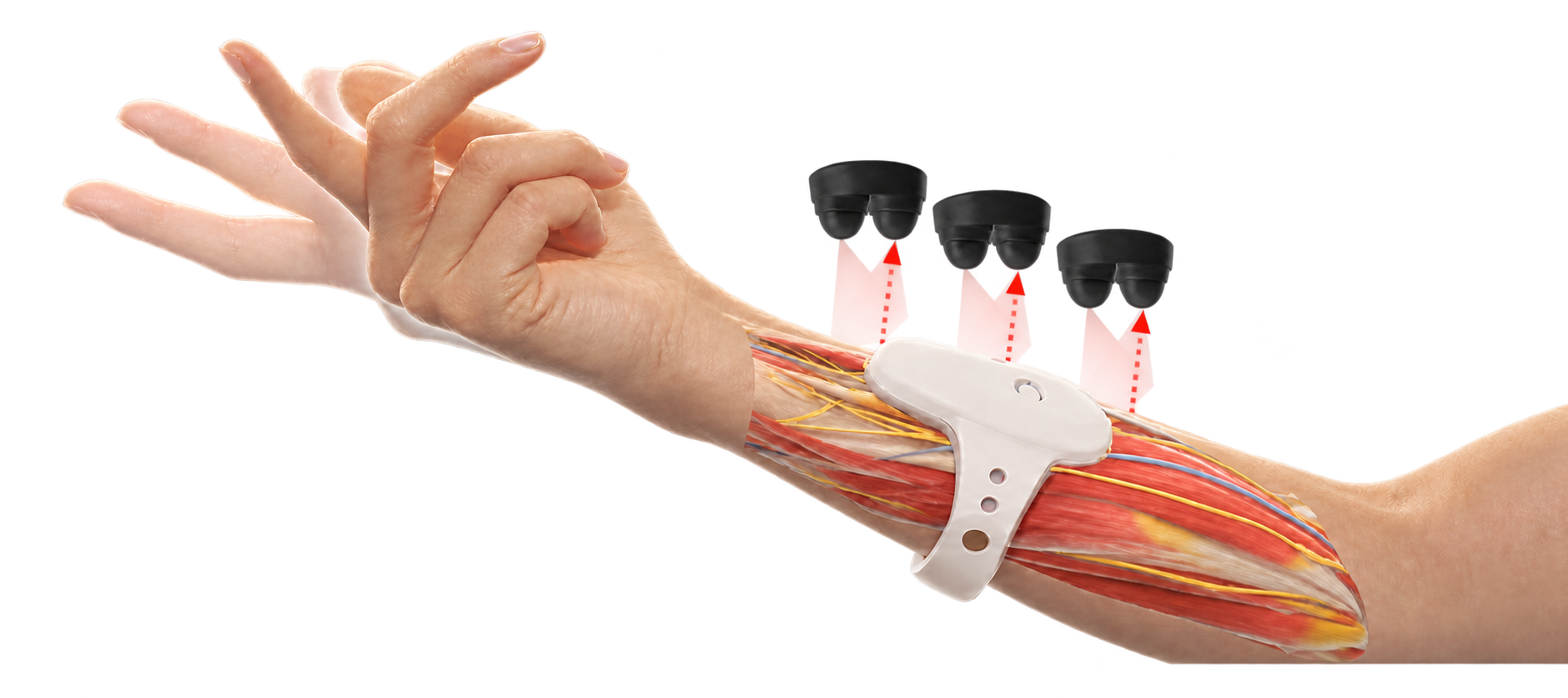
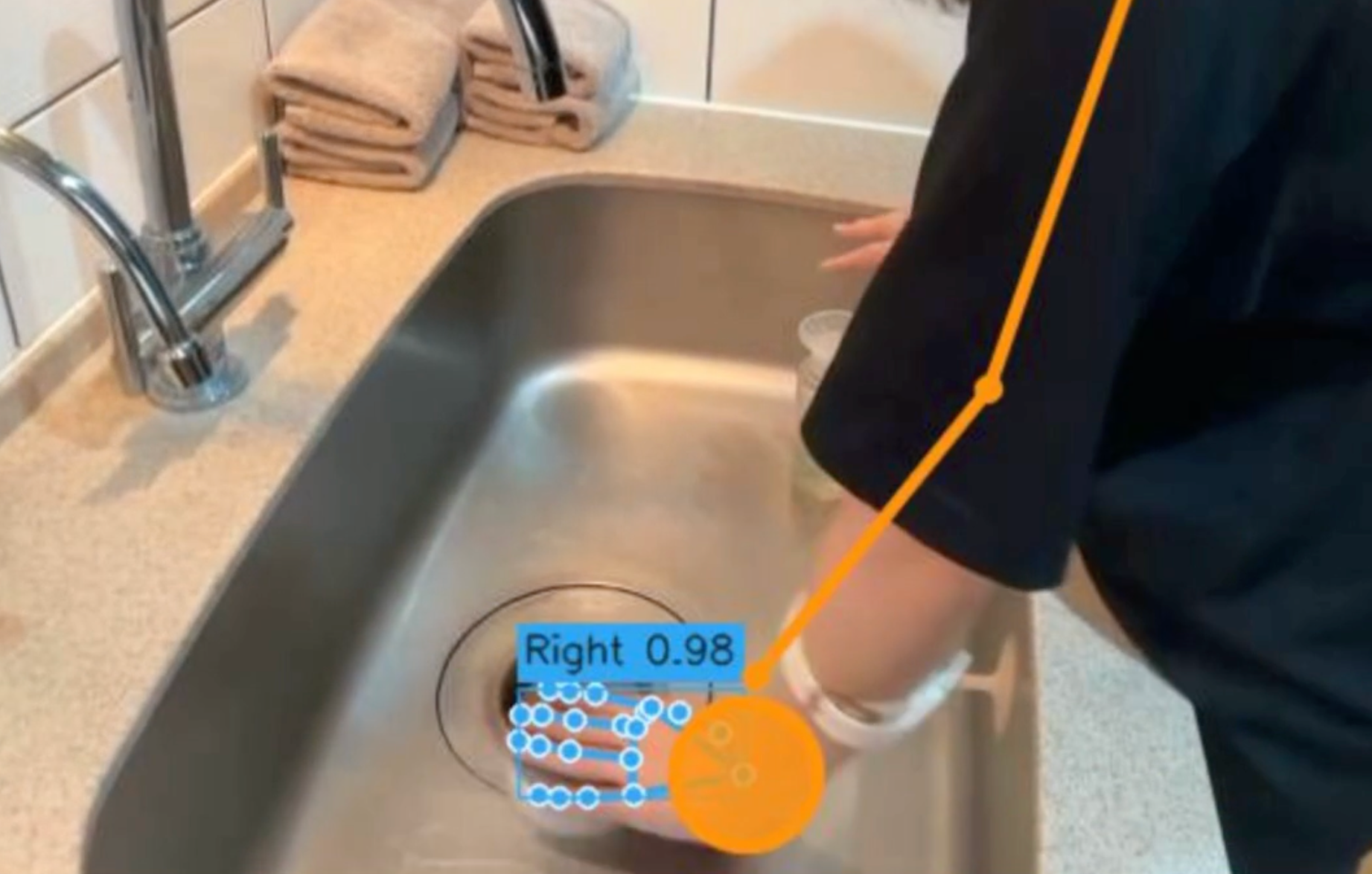
Since its founding in 2012, H2L has worked on digitizing proprioception. In 2018, it began selling FirstVR, which incorporates a muscle displacement sensor, in Japan and has built up technology for acquiring and analyzing bodily information.
Generating control signals for autonomous control
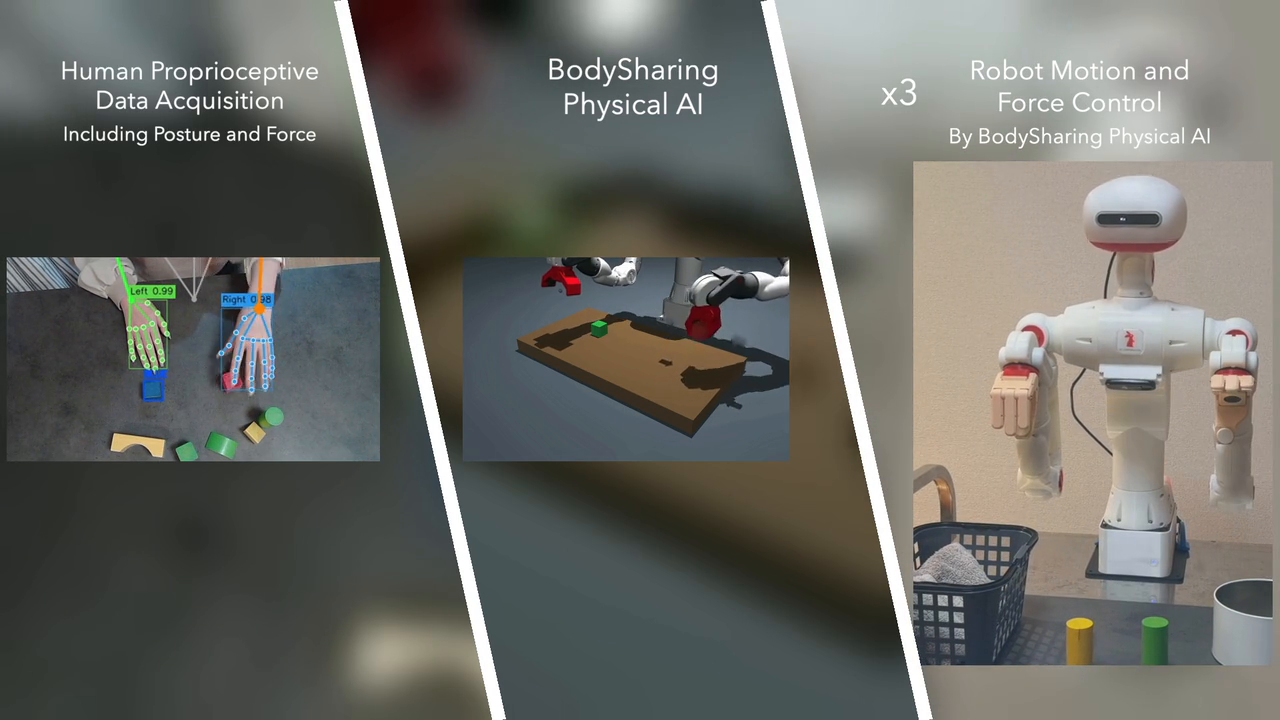
Human experience data containing movement and force application are used for training to generate control signals containing robot motion and force application. Those signals enable autonomous robot control.
Internal evaluation on a physical robot
H2L evaluated the transport and organization of cubes and towels using a dual-arm Sciurus17 robot. A control model with approximately 52 million parameters was trained using experience data from demonstrations performed by people with bare hands.
| Total duration of experience data | Data composition | Task success rate |
|---|---|---|
| 15 minutes | Three people demonstrated for five minutes each | 95% |
| 22 minutes | Eleven people each demonstrated twice for one minute | 99% |
The durations above are the total lengths of experience data used for training, not the computation time required for training. Participant composition and demonstration methods differed between conditions. These results apply to the tasks and environment of this evaluation and do not guarantee the same success rates for other tasks or environments.
Demonstrated robot models and planned expansion
BodySharing® Physical AI has been demonstrated on xArm7 and Sciurus17.
H2L plans to expand support gradually to single-arm and dual-arm robots with grippers and at least six degrees of freedom.
Business applications and adoption inquiries
H2L welcomes inquiries about business adoption of BodySharing® Physical AI. Depending on the target task and environment, companies can discuss how to collect work data on site, build a dedicated Physical AI model, and connect it to a robot.
A browser-based simulator is being prepared for release. H2L will share its availability, functions, supported robots, and other details once they are decided.
Potential applications rooted in Japanese industry
Potential applications include passing on skilled manufacturing practices, supporting backroom work in logistics and retail, and assisting with household tidying. H2L aims to develop robots that handle objects of different stiffness and handling requirements using experience data that combine movement and force application.
H2L researches and develops BodySharing® technology, which digitizes and shares bodily information. Beyond robot control, experience data can be used to transfer skills in sports and manufacturing. H2L aims to build a Large Sensation Model (LSM) based on the proprioceptive data it collects.
Business inquiry contact
Companies considering the digitization of skilled work or robotic automation can contact H2L using the form below.
Special page: https://h2l.jp/en/bodysharing-physical-ai-2/
If you cannot submit the form, email info@H2L.jp. Media inquiries are also accepted at the same contact.
Company profile
- Company
- H2L, Inc.
- Address
- 3-4-21 Roppongi, Minato-ku, Tokyo 106-0032, Japan
- Representative
- CEO Emi Tamaki
- Established
- July 2, 2012
- Business
- Research, development, and provision of tools that enhance human capabilities, AI, and services that transmit bodily movement and share experiences
- Website
- https://h2l.jp/en/
Meaning of “developed in Japan”
In this release, “developed in Japan” refers to the data and Physical AI based on proprioceptive technology that H2L has researched and developed in Japan. It does not indicate the country of origin of the robot hardware or its components.
※ According to H2L as of October 14, 2026.